Showing posts with label Kaiser Health News. Show all posts

U.S. District Judge Matthew Kacsmaryk’s decision to put the Food and Drug Administration’s approval of the abortion drug mifepristone on hold has thrown future access to medication abortion into question nationwide and laid the foundation for a high-stakes Supreme Court battle. The ruling, issued Friday, is set to go into effect at the end of this week unless a higher court intervenes. The Justice Department asked an appeals court to block it Monday. (Atkins and Arkin, 4/10)


KHN (Kaiser Health News) is a national newsroom that produces in-depth journalism about health issues. Together with Policy Analysis and Polling, KHN is one of the three major operating programs at KFF (Kaiser Family Foundation). KFF is an endowed nonprofit organization providing information on health issues to the nation.

USE OUR CONTENT

This story can be republished for free (details).


from Kaiser Health News https://ift.tt/reg8InB

KHN chief Washington correspondent Julie Rovner discussed the aftermath of a federal judge’s decision in Texas that blocks the Affordable Care Act’s provision on preventive care benefits on Slate’s “What Next” on April 5.

KHN Nevada correspondent Jazmin Orozco Rodriguez discussed how cuts to the Supplemental Nutrition Assistance Program affect food security in rural America on Nevada Independent’s “Cafecito Nevada” on April 3.

KHN (Kaiser Health News) is a national newsroom that produces in-depth journalism about health issues. Together with Policy Analysis and Polling, KHN is one of the three major operating programs at KFF (Kaiser Family Foundation). KFF is an endowed nonprofit organization providing information on health issues to the nation.

USE OUR CONTENT

This story can be republished for free (details).


from Kaiser Health News https://ift.tt/OquLpAR

When a federal judge in Texas declared unconstitutional a popular part of the Affordable Care Act that ensures no-cost preventive care for certain services, such as screening exams for conditions such as diabetes, hepatitis, and certain cancers, it left a lot of people with a lot of questions.

On the face of it, the March 30 decision could affect ACA and job-based insurance plans nationwide and a host of medical services now free for patients.

What does this mean, really, for people with insurance? Policy and legal experts say there are some unanswered questions and a whole lot of nuances.

First, some background. The case, the latest legal challenge to the ACA, was brought by several individuals and an employer in Texas who argued the law’s requirement of free preventive care is unconstitutional, and also contended that requiring coverage of HIV prevention treatment can violate employers’ religious rights.

U.S. District Judge Reed O’Connor agreed with some of their arguments, declaring unconstitutional one way the recommended tests are chosen, and agreeing that requiring employers to offer preexposure prophylaxis treatment for HIV, known as PrEP, violates the Religious Freedom Restoration Act. But O’Connor disagreed on other points that could have eliminated no-pay coverage for such things as contraceptives and vaccines.

Despite the ruling, nothing much is likely to change for enrollees in the short term, as insurers and employers are expected to be reluctant or even unable to immediately begin charging copayments or deductibles for the affected preventive care.

But as the case makes its way through the court system — both the Department of Justice and the plaintiffs have filed notices that they would appeal — here are four things to keep in mind:

1. A Lot Remains Uncertain

Because of the ACA, most insured people currently get preventive care that includes screening tests like mammograms and colonoscopies — along with other exams, such as checks for bone thinning in older women, depression in adults, or obesity in children — without being charged a copay or money toward a deductible. There’s a long list of qualifying services, including all those that get a top “A” or “B” recommendation from the U.S. Preventive Services Task Force, or USPSTF, an independent group of volunteer experts.

But O’Connor, of the U.S. District Court for the Northern District of Texas, said members of that volunteer task force, who are appointed by the director of a federal agency, are “‘officers’ of the United States” and therefore need to be appointed by the president and confirmed by the Senate. Because they are not, he ruled that the use of their recommendations to set free preventive services under the ACA is unconstitutional.

Here’s where things get confusing, because not all of the more than 50 task force recommendations would necessarily be affected if the ruling stands.

Some policy experts said certain services would remain free of copayments or other cost sharing for patients, partly because certain tests or treatments are also recommended under guidelines from other federal agencies and are therefore not affected by the ruling.

The federal Health Resources and Services Administration, for example, sets preventive care guidelines for a host of women’s health issues, including mammograms and contraception, although there is an exemption for religious employers. Additionally, a Centers for Disease Control and Prevention advisory committee recommends certain vaccines for children and adults. Further, cost sharing might not apply to some services because many experts expect the ruling will not impact tests or treatment recommendations made before 2010, the year the ACA went into effect.

“The idea is that when Congress passed the ACA, it adopted all the recommendations from the USPSTF prior to 2010, but anything since then the judge says is not constitutional,” said Timothy Jost, law professor emeritus at Washington and Lee University School of Law, who closely follows the ACA.

2. What Is Certain

One problem, though, is most of the recommendations have been revised, part of the task force’s ongoing work to update recommendations as new scientific evidence arises.

A recent addition, for example, made in 2021, was to recommend that adults ages 45 to 49 get screened for colorectal cancer. Prior to that, the screening was aimed mainly at adults 50 and older.

One possible effect of the judge’s ruling, if it’s not overturned on appeal, is that people ages 45 to 49 might no longer be guaranteed no-copay colon cancer screenings.

But the changes could be broader.

That’s because it isn’t clear how the ruling would affect recommendations that have been revised since 2010. For instance, would any revision or update made by the task force since 2010 make the entire recommendation subject to the ruling, Jost asked, or would the ruling apply only to the change made, such as the expansion of the age for colon cancer screening?

“Is everything the USPSTF touched since 2010 now unconstitutional?” asked Jost.

There may be only two pre-2010 recommendations that are unchanged since then, and both involve tests done during pregnancy to see if the blood of mothers and babies is compatible, said Dr. A. Mark Fendrick, director of the Center for Value-Based Insurance Design at the University of Michigan.

New or updated recommendations include: A 2019 recommendation that PrEP be offered to people at high risk of getting HIV, a 2021 update for annual lung cancer scans for certain current or former smokers, and screening for hepatitis C in adults ages 18 to 79, updated in 2020.

3. It Will Depend on Your Coverage and Your Geography

Each insurer and self-insured employer will decide whether to reinstate copayments or other cost sharing for these services. Even if they do, it may take time for them to go into effect, especially given that policies are now in the middle of a plan year, making them contractually hard to change.

“It will depend on your employer and what they want to do, and depend on whether you have a collective bargaining agreement and a whole lot of other variables,” said Sara Rosenbaum, a professor of health law and policy at George Washington University.

That type of varying coverage was “exactly what the ACA was designed to get away from, in order to make this more uniform for all of us,” Rosenbaum added.

Even with the ruling, at least 15 states have laws requiring coverage of preventive services without cost sharing, according to an analysis by researchers at Georgetown University’s Center on Health Insurance Reforms.

But state rules apply only to ACA plans and job-based plans offered by employers who buy coverage from an insurer. Most large employers — and a growing number of smaller ones — self-insure and are not subject to state coverage rules.

4. What Happens Next?

Congress could resolve the matter with a simple fix to the ACA, says Fendrick, of the University of Michigan. “Give the task force recommendations approval by the secretary of the Department of Health and Human Services and it’s done,” he said.

Still, even though the preventive services coverage is very popular with consumers, the politics of changing the ACA are challenging, especially in a sharply divided Congress.

In the meantime, the case will go through the appeals process, and a final resolution could take months or even years.

The Department of Justice will seek to overturn the ruling, while plaintiffs will likely seek to broaden it, by challenging the parts of the judge’s ruling that went against them. Specifically, the individuals and employer who brought the case wanted the ruling also to cover recommendations made by other agencies, including the set of women’s health recommendations that include contraceptives.

“Everything as far as we are concerned is in play,” Rosenbaum said.

KHN (Kaiser Health News) is a national newsroom that produces in-depth journalism about health issues. Together with Policy Analysis and Polling, KHN is one of the three major operating programs at KFF (Kaiser Family Foundation). KFF is an endowed nonprofit organization providing information on health issues to the nation.

USE OUR CONTENT

This story can be republished for free (details).


from Kaiser Health News https://ift.tt/UcQkJ93

The Host

Julie Rovner KHN @jrovner Read Julie's stories. Julie Rovner is chief Washington correspondent and host of KHN’s weekly health policy news podcast, “What the Health?” A noted expert on health policy issues, Julie is the author of the critically praised reference book “Health Care Politics and Policy A to Z,” now in its third edition.

Several states have begun the herculean task of redetermining how many of an estimated 85 million Americans currently receiving health coverage through the Medicaid program are still eligible. To receive federal covid-19 relief funds, states were required to keep enrollees covered during the pandemic. As many as 15 million people could be struck from the program’s rolls — many of whom are still eligible, or are eligible for other programs and need to be steered to them.

Meanwhile, the trustees of the Medicare program report that its Hospital Insurance Trust Fund should remain solvent until 2031, three years longer than it projected last year. That allows lawmakers to continue to put off what are likely to be politically unpleasant decisions, although they will eventually have to deal with Medicare’s underlying financial woes (and those of Social Security).

This week’s panelists are Julie Rovner of KHN, Alice Miranda Ollstein of Politico, Amy Goldstein of The Washington Post, and Rachel Roubein of The Washington Post.

Panelists

Alice Miranda Ollstein Politico @AliceOllstein Read Alice's stories Amy Goldstein The Washington Post @goldsteinamy Read Amy's Stories Rachel Roubein The Washington Post @rachel_roubein Read Rachel's stories

Among the takeaways from this week’s episode:

  • The Medicaid “unwinding” is likely to strip health coverage not just from millions of people who are no longer eligible for the program, but also from millions of people who still are. States are supposed to take their time reevaluating eligibility, but some are rushing to disenroll people.
  • Another complication in an already complicated task is that many Medicaid workers hired during the pandemic have never actually redetermined Medicaid eligibility for anyone, because states had been required to keep people who qualified on the program.
  • Grimly, some of the extra years of solvency gained in the Medicare Hospital Insurance Trust Fund are a result of pandemic deaths in the 65-and-older population.
  • The Department of Health and Human Services has issued payment rules for Medicare Advantage Plans for 2024. The agency ended up conceding at least somewhat to private plans that for years have been receiving more than they should have from the U.S. Treasury. The new rules will work to shrink those overpayments going forward, but not try to recoup those from years past.
  • The situation with “first-dollar coverage” of preventive services by commercial health plans is becoming a bit clearer following last week’s decision in Texas that part of the Affordable Care Act’s preventive services mandate is unconstitutional. Judge Reed O’Connor (who in 2018 ruled the entire health law unconstitutional) issued a nationwide stay on coverage requirements from the U.S. Preventive Services Task Force, saying it is a volunteer organization not subject to the oversight of the Health and Human Services secretary. The federal government is already appealing that ruling.
  • But O’Connor’s decision is not quite as sweeping as first thought. He banned required coverage only of the task force’s recommendations made after March 23, 2010 — the day the ACA was signed into law. Earlier recommendations stand. O’Connor also did not strike preventive services recommended by the Health Resources and Services Administration and the Centers for Disease Control and Prevention’s Advisory Committee on Immunization Practices, since those agencies are overseen by an official appointed by the president and confirmed by the Senate.
  • In abortion news, the liberal candidate for a Supreme Court seat in Wisconsin, Janet Protasiewicz, defeated her conservative opponent to switch the majority on the court from 4-3 conservative to 4-3 liberal. That ideological shift is likely to preserve abortion rights in the state, and possibly stem the ability of the GOP legislature to continue to draw maps that favor Republicans.
  • Meanwhile, states in the South are continuing to pull back on abortion access. The Florida legislature is moving rapidly on a bill that would ban the procedure after six weeks of pregnancy, while in North Carolina, a single legislator’s switch from Democrat to Republican has given the latter a supermajority in the legislature large enough to override any veto of the Democratic governor, Roy Cooper.

Also this week, Rovner interviews Daniel Chang, who reported and wrote the latest KHN-NPR “Bill of the Month” feature about a child who had a medical bill sent to collections before he started to learn to read. If you have an outrageous or exorbitant medical bill you want to share with us, you can do that here.

Plus, for “extra credit,” the panelists suggest health policy stories they read this week that they think you should read, too:

Julie Rovner: New York Magazine’s “The Shared Anti-Trans and Anti-Abortion Playbook,” by Irin Carmon.

Alice Miranda Ollstein: The Los Angeles Times’ “Horrifying Stories of Women Chased Down by the LAPD Abortion Squad Before Roe vs. Wade,” by Brittny Mejia.

Rachel Roubein: KHN’s “‘Hard to Get Sober Young’: Inside One of the Country’s Few Recovery High Schools,” by Stephanie Daniel of KUNC.

Amy Goldstein: The Washington Post’s “After Decades Under a Virus’s Shadow, He Now Lives Free of HIV,” by Mark Johnson.

Also mentioned in this week’s podcast:

Credits

Francis Ying Audio producer Emmarie Huetteman Editor

To hear all our podcasts, click here.

And subscribe to KHN’s What the Health? on Spotify, Apple Podcasts, Stitcher, Pocket Casts, or wherever you listen to podcasts.

KHN (Kaiser Health News) is a national newsroom that produces in-depth journalism about health issues. Together with Policy Analysis and Polling, KHN is one of the three major operating programs at KFF (Kaiser Family Foundation). KFF is an endowed nonprofit organization providing information on health issues to the nation.

USE OUR CONTENT

This story can be republished for free (details).


from Kaiser Health News https://ift.tt/SsClONn

Could a charity hospital founded by a crusading Dutch playwright, a group of Quakers, and a judge working undercover become a model for the U.S. health care system? In this episode of the podcast “An Arm and a Leg,” host Dan Weissmann speaks with Dr. Ricardo Nuila to find out.

Nuila’s new book, The People’s Hospital: Hope and Peril in American Medicine, uses the innovative model of the Ben Taub Hospital in Houston, where he practices, to argue for a publicly funded health system in the U.S. that’s available to everybody, with or without insurance. 

Dan Weissmann @danweissmann Host and producer of "An Arm and a Leg." Previously, Dan was a staff reporter for Marketplace and Chicago's WBEZ. His work also appears on All Things Considered, Marketplace, the BBC, 99 Percent Invisible, and Reveal, from the Center for Investigative Reporting.

Credits

Emily Pisacreta Producer Adam Raymonda Audio Wizard Afi Yellow-Duke Editor Click to open the Transcript Transcript: A Doctor’s Love Letter to ‘The People’s Hospital’

Note: “An Arm and a Leg” uses speech-recognition software to generate transcripts, which may contain errors. Please use the transcript as a tool but check the corresponding audio before quoting the podcast.

Dan: Ben Taub Hospital is a publicly funded safety net hospital in Houston, Texas. The majority of patients don’t have insurance of any kind. 

Dr. Ricardo Nuila has been working at Ben Taub since he was an intern, a medical student. He took me on a tour.

Ricardo Nuila: I started here and, you know, literally I just did not want to leave here cuz I just, just really enjoyed my job here

Dan: He’s just published a book called “The People’s Hospital” that’s not just a love letter to the place, it’s a pitch: 

Not only is this place way, way cheaper than what we’re used to, in many ways it’s better. And it’s a model, a real alternative to what-we’re-used-to.

So, I ask him to pick ONE patient’s story from the book to tell, he picks a patient he calls Stephen. A restaurant manager, a Republican. A guy who did not expect to end up here.

But he had a giant lump on the side of his throat, and his insurance didn’t cover much. He paid cash, upfront, to get seen in a local ER. 

Ricardo Nuila: finally there was a doctor who had seen a CAT scan and said, you have tonsillar cancer, cancer, however, you don’t have, uh, insurance 

Dan: Tonsillar cancer. Cancer of the tonsils. That landed hard. So did the “however.” 

Ricardo Nuila: He felt shitty you know, that somebody could tell you cancer, but there’s nothing that we are gonna do about it because of, of how much and…

Dan: It’s like it’s too painful — or too obvious — to finish the sentence: Because of your insurance. Somebody tells Steven to try the public hospital, Ben Taub. He expects the worst. But that’s not what he finds.

Ricardo Nuila: He comes to love this place. He gives, this is like so Steven, but he, he gives gift cards to the people greeting at the door because they’re nice and they do their job well cuz they make his day,

Dan: And it’s not just that he likes the people at the door.

Ricardo Nuila: He feels like he got really good healthcare and that he also, um, thought that the price was extremely reason.

Dan: Stephen lost his insurance when he got too sick to work, and he doesn’t qualify for Medicaid. He owns a house, he’s got savings, Texas has really stringent Medicaid restrictions– so he’s paying out of pocket.

Ricardo Nuila: But his final bill is pennies of what he thought he would pay.

Dan: Stephen’s dad had gotten radiation treatment for cancer, and the sticker price was 700 thousand dollars. Stephen had gotten radiation AND chemo AND surgery — and had been hospitalized for a good while. 

His bill was 32 thousand, three hundred and seventy-eight bucks. Real money for sure, but he can pay it. And it’s less than five percent of his dad’s bill for much less extensive treatment. 

Ricardo Nuila: And the healthcare is really good. And so he’s almost proud that he’s had this experience

Dan: Steven’s become a convert. And as Ricardo Nuila walks me into a conference room, it’s clear: He hopes his book will create more converts. 

Ricardo Nuila: you start to see this model and it makes you think, can things be different in healthcare? I think that that’s an option. But we as a country haven’t thought about that. Seriously. You know?

Dan: And if it seems politically unimaginable that we could have anything like this around the country– an effective, efficient, CHEAP, publicly-funded health system– 

Well, the idea that Houston could have one, that was pretty unlikely too.

In fact, the story of how Ben Taub got here may be the most surprising story in Ricardo Nuila’s whole book. 

This is An Arm and a Leg, a show about why health care costs so freaking much, and what we can maybe do about it. I’m Dan Weissmann. I’m a reporter, and I like a challenge. So our job on this show is to take one of the most enraging, terrifying, depressing parts of American life and to bring you a show that’s entertaining, empowering and useful.

Ben Taub Hospital sits at the edge of the Texas Medical Center– that’s a giant neighborhood full of hospitals and medical schools, including some of the best in the country, like the M.D. Anderson cancer center. 

In his book, Ricardo Nuila writes about how some patients at Ben Taub can see from their rooms the gleaming buildings of Ben Taub’s neighbors. 

So when I visit, I make him show me the view. We look out from a stairwell at a glass tower, M.D. Anderson’s Sheikh Zayed building.

Ricardo Nuila: that’s glamorous. Right? you get a glimpse into the rest of the medical center here. Ben Taub sticks out, I feel like, because it’s, it’s brick versus glass. 

Dan: But as Ricardo Nuila makes clear in his book: This unglamorous brick building gets the job done. 

In addition to Steven, there’s Ebonie, whose complicated pregnancy — there’s a lot of vaginal bleeding– gets tracked more precisely than it would elsewhere: 

At other hospitals, nurses eyeball the pads that absorb that blood and note heavy, medium or light bleeding. At Ben Taub, they’ve adopted an innovative approach: weighing each pad to get an exact measurement. 

Another patient, Christian, has bounced around other systems without anybody accurately diagnosing the dire kidney problems that have kept him in pain for years. Because he didn’t have good insurance, it wasn’t worth anybody’s time. 

At Ben Taub, insurance isn’t an obstacle, 

Ricardo Nuila: We organize things, which is basically, okay, we need to focus on your kidneys right now and we need to get you to see a geneticist. And both of those things happened.

Dan: they not only diagnose him, they get him on a form of dialysis that he can manage himself at home.

It’s cheaper, and delivers better quality of life for him.

Everything at Ben Taub is cheaper. The system spends about a third as much per patient as the national average. In part, that may be because nobody earns million-dollar salaries here. 

But Ricardo Nuila makes the case over and over again that they take the time– because they have it– to make wise use of resources. 

They don’t have as many MRI machines as other hospitals. But guess what? A lot of patients don’t need MRIs. 

But Ben Taub can’t meet every need: One patient, Geronimo, needs a liver transplant, and that requires resources the hospital just doesn’t have. 

But Ricardo Nuila and his colleagues put a lot of time into wrenching him back onto Medicaid, so he can get the transplant somewhere else. They rope in a Congressman to get it done. 

Geronimo tells his mom:”I feel so important. Everyone treats me like I’m rich.” 

Ricardo Nuila: That’s what I think a lot of people really want is just the sense that the person who’s responsible for your care is thinking through the problem with you and aware that you are not having a great day and wants to deal with that situation with you. And I just felt like this environment allowed me to like, have those moments.

Dan: So who pays for this environment? It may be cheaper, but it isn’t free. 

Some patients are on Medicaid. Some are on Medicare. Some have private insurance. But the majority don’t have any insurance at all. 

Some, like Stephen, pay cash. And a lot of the rest — about a third of Ben Taub’s patients — are treated for free.

The bulk of Ben Taub’s funding comes from a special property tax in Harris County, where Houston is located. It funds a whole system called Harris Health– Ben Taub, a second hospital, and a bunch of clinics. 

And of course, none of this has always existed. 

In fact, it’s only here, like this, because of a really wild story, with two big characters. One of whom wasn’t even from Houston. He was a writer I’d never heard of, a Dutch guy named Jan de Hartog.

Ricardo Nuila: de Hartog was one of the most amazing people that you could read about. He was a Nazi resistance fighter, Dutch ship captain. 

Dan: And while he was hiding out in Denmark during the war– in between saving a few Jewish babies and running war missions in his tugboat–  

he wrote a romantic dramedy that — later became a broadway hit. And then got adapted into a Broadway musical called I Do, I Do– which, Broadway-musical nerds in the house– starred Mary Martin and Robert Preston– you know, The Music Man– and had a song that your mom might still remember. 

 (musical sounds) 

Dan: Yeah. So, interesting guy. And in the early 1960s he came to Houston to teach playwriting at a local University.  It was a big time for him. He’d just gotten married — for the third time, but this one was for keeps- and become a Quaker. 

Ricardo Nuila: And when he and his wife Marjorie come to Houston, they find that there’s all these whisperings about this charity hospital in town in Houston about how, how awful the conditions are. That the children in the maternity ward would cry all night for the, for a lack of milk, and so as part of his faith, he decides that he needs to volunteer there

Dan: When de Hartog writes about the hospital later, he describes the experience of walking in for the first time as literally mind-boggling. 

He’s like: I know what a hospital smells like. Disinfectant, maybe some fresh laundry. And I know what a slaughterhouse smells like: Blood, and shit. And the smell here is slaughterhouse. 

As he looks around, the sights are something else.

Ricardo Nuila: He sees a cockroach crawling into the tracheostomy of like a patient. He sees like people sitting in their own filth. 

Dan: He and Marjorie do not up and quit. They stick around. And then they recruit a dozen Quakers and a few society ladies to come volunteer with them, and get the Red Cross to train them.

And it’s nuts. This is a rich city. The ZOO is air conditioned. But not this hospital. 

And he starts to catch on: Why it’s so horrible.

Number one is racism. 

The hospital serves mostly Black and Brown patients. When Jan and Marjorie start volunteering, the other volunteers are all society ladies, and the whole program is set up so they don’t touch patients. DeHartog later says he asked why, and the volunteer coordinator says, Southern ladies can’t have physical contact with black people.

But she doesn’t say black people. She uses the n-word. 

 When he asks staff why public officials don’t do something about the rotten conditions, they say: What politician is going to stick up for black people? The n-word comes up again. 

And– de Hartog doesn’t make this connection, but it seems pretty on the nose: The hospital itself is named after Jefferson Davis, who led the Confederacy in the Civil War. 

But there’s also a political mechanism for institutionalizing this neglect, without ever having to acknowledge the role of racism: 

No one particular political entity — no one particular political leader– is responsible for the public hospital, financially. The city of Houston and Harris County are each supposed to kick in HALF. So it doesn’t belong to either of them. Here’s de Hartog describing the city-county dynamic in a lecture he gave many years later. 

Jan de Hartog: And they were continuously at each other’s throats. The one said, you don’t pay enough. The other said, but you don’t. And they went back and forth

Dan: The top official for Harris County actually has the title County Judge. At that time, this was a guy named Bill Elliott. 

And you’ll hear in this clip from a local newscast, he wasn’t exactly reaching for the bill. Here he is, explaining why the some problem with the hospital is actually the CITY’s fault. 

Judge Bill Elliott: it’s absolutely ridiculous, uh, to say that, uh, this is a responsibility and this is the fault of Harris County.

Dan: And the city? At least one.council member is calling for a budget cut. 

Which really pisses de Hartog off. 

And de Hartog actually loves the city. It’s an exciting place. It’s booming– growing super-fast. And it’s not just an oil town. 

Ricardo Nuila: Houston at that time was the home of NASA.

NASA narrator: Future manned space flight missions to the moon and perhaps the planets will be commanded from this control room of the Mission Control Center at NASA’s Manned Spacecraft Center,

Ricardo Nuila: It had built this Astrodome, it was the city of the future. 

Dan: The Astrodome– you know, a sports stadium WITH AIR CONDITIONING. . 

Astrodome Narrator: A fully enclosed building, large enough for any sport convention show or conclave with constant temperature and humidity independent of outside weather,

Dan: CBS News does a report about the booming city: NASA, the oil wealth, the Astrodome. And de Hartog is a main character– talking about how much he loves the town.

Jan de Hartog:  it is a city of, a city of unlimited opportunities. It’s an immensely exciting town, and you feel that anything is possible, 

Dan: It wraps up with Walter Cronkite talking about how everybody in town is absolutely nuts about football.

Walter Cronkite: Their brand of football is like their brand of city and brand of life. Play wide open. Take a chance, try anything. Above all, do it with zest and do it big. 

Dan: Oh, and there’s this OTHER thing Houston is really becoming known for. 

Cutting edge medicine. For twenty years, the city’s been building the Texas Medical Center — that giant campus where more than a dozen hospitals and med schools now operate right on top of each other. Baylor College of Medicine actually moved from Dallas to Houston to be part of it. 

Ricardo Nuila: Houston is a really deeply medical city. And at that time they’re all working on extraordinary things

Dan: Yeah, in 1964, while Jan de Hartog is witnessing the suffering at the charity hospital, Dr. Michael deBakey is performing the world’s first coronary artery bypass at a private hospital in town. 

But the medical establishment were not allies. Jefferson Davis hospital, on the outskirts of town, was about to be replaced by a new building in the Texas Medical Center. 

But the Medical Society– the local doctors’ association — hadn’t wanted the charity hospital as a neighbor. They’d actually put up a ballot initiative to keep the new building at the old site. 

Medical Society Voice-Over: you the taxpayer, will pay the extra cost That’s why your doctor recommends you vote for the new hospital to remain at its present site. 

Dan: It hadn’t worked, but along with the budget cuts, officials were now talking about DELAYING the charity hospital’s move to the new building, which had just been completed. De Hartog and his friends, smell a rat. 

They think the powers that be are actually going to sell the new building in the Medical Center to some other hospital that wants in. This has been a public conversation.

Jan de Hartog: There had been offers to buy it and they wanted to wait for the highest bidder

Ricardo Nuila: He writes a series of op-eds for the Houston Chronicle that start to get press, not just in Houston, but around the country and in fact around the world. 

Dan: He describes the awful things he’s seen. And he appeals to Houstonians’ sense of pride in their bustling, futuristic city. A city he loves, too. Here’s how his first op-ed ends…

Jan de Hartog: I cannot believe that it is the will of the citizens of Houston, that our growing medical center rightly becoming famous all over the. Shall be allowed to harbor the cancerous sore of man’s inhumanity to man. It would turn the entire center planned as Houston’s glory into Houston’s shame. 

Dan: Even just that first op ed made a lot of noise.

Jan de Hartog: the bomb exploded and the national magazines and newspapers and TV zeroed in on the hospital to find out what was going on, 

Dan: … and immediately, the hospital DOES move into its new home in the Medical Center. But the funding issue isn’t solved. 

So de Hartog keeps pushing. 

Ricardo Nuila: He writes a book called “The Hospital” 

Dan: He goes to churches around town, synagogues, everywhere he can, recruiting hundreds of volunteers. 

But there’s no political progress — and conditions at the hospital actually get worse. Key nurses get burned out and quit. Things go to hell.

In a harrowing diary entry, he writes about full bedpans left on tables next to trays of food. About a patient crying out for help, and hearing back “Shut up!” 

Jan de Hartog: Never before had I realized to this extent, the depth of our damnation, and at that deepest moment of desperation, when we knew nothing could be done, nothing would change for the simple reason that

Jan de Hartog: those who had the fate of the hospital in their hands were not there. Mayor Welsh didn’t work there. Uh, commissioner Bill Elliot Judge, the county judge did not work there. 

Dan: But THEN, there’s a turn. Somebody shows up. That’s right after this.

This episode of An Arm and a Leg is produced in partnership with Kaiser Health News. That’s a non-profit newsroom about health care in America. KHN is not affiliated with the giant health care player Kaiser Permanente. We’ll have more information about KHN at the end of this episode.

So, Jan de Hartog keeps slogging away. 

He gives a talk at a Baptist church– he reads that diary entry, the one with the bedpans, and the absence of Judge Elliott and other leaders.

And at first he thinks he didn’t go over so big. Nobody even raises their hand to volunteer. 

But then it happens. 

Jan de Hartog: When, uh, we were about to leave, a man turned up with a baby on his hip who said, uh, do you train people at night?

Dan: And the guy seems to be looking around, trying to make sure nobody’s listening. De Hartog tells the guy, yeah, we could do that…

Jan de Hartog: He said, I mean, a dead of night without anybody seeing. 

Dan: De Hartog’s like, “um, sure, I guess. Why, though?” 

Jan de Hartog: He said, well, I am Judge Elliot, 

Dan: Judge Elliott. The county judge. Probably the most powerful politician in town. That’s who wants to volunteer. In secret. Without anybody seeing. He says to de Hartog

Jan de Hartog: I cannot do it as a judge, but I must do it as a man. And that was the moment that the whole damn thing changed.. 

Dan: Because Judge Bill Elliott followed through.

Ricardo Nuila: He trains himself in a clandestine manner to be an orderly, at night, and he verifies everything that de Hartog has said. 

Dan: de Hartog actually oversees the judge’s final practical exam, where Bill Elliott tends to an African-American man named Willie Small. 

Jan de Hartog: the judge with his thermometer went and put his hand on Willie’s shoulder and said, Mr. Small, sir, I’d like to take your temperature to hear that, to hear a southern judge, , say “Mr. Small, sir” 

Dan: It was a symbolic moment. The judge had to touch, had to defer to, a Black man. So not only had the judge now seen everything, he took responsibility for what he had seen. 

There’s a proposal for a county-wide property tax, to fund what’s called a Hospital District. Now there’s a referendum, and Elliott backs it all the way.

Jan de Hartog: and we all waited with baited breaths for the outcome. And it was no

Dan: Yeah. The referendum fails. And as de Hartog tells it, once it does, a real backlash starts to build. It gets personal.

Jan de Hartog: those who had resented our presence from the very beginning became vocal. Margie and I, were called communists

Ricardo Nuila: De Hartog just would not flinch. I mean, he and his wife’s lives were threatened. 

Dan: Also, somebody threw a bag of excrement at their door. 

Eventually, de Hartog says the Red Cross, which was training and supervising volunteers at the hospital, came to him and Marjorie and said, “It might be better for us if you left town for a while.” 

They did — went on to all kinds of adventures. 

Meanwhile, Bill Elliott kept pushing, and keeps pulling in allies– including, eventually, the Medical Society. 

Ricardo Nuila: he rallies them to get behind it.

Dan: He gets the question on the ballot AGAIN later that same year. And it passes in November 1965. 

It’s a big moment. 

Ricardo Nuila:  What’s also interesting is that it’s forgotten. Something that I’ve gleaned from all this is that you know, people will forget and you have to remind them. 

Dan:  And while we’re remembering: In 1965, the whole country is making some big commitments to health care for a lot of people. President Lyndon Johnson signs Medicare and Medicaid into law in July of that year.

It’s probably also worth noting that Medicare and Medicaid help make Ben Taub possible: About a third of the hospital’s patients are on one or the other. It’s a minority of patients, but it’s many millions of dollars of funding. 

The 1960s were a notoriously divisive time. And so is this. 

Ricardo Nuila doesn’t ignore today’s political polarization — or how that polarization makes it hard to imagine a national conversation about creating a different health care system. 

Or the role that doctors have historically played in resisting that conversation.

It’s part of his story. His family story. And in a book about a place where a lot of sad things do happen, this may be the toughest one.

Ricardo Nuila: I was born into a family of doctors and my dad in many ways was a hero to me. I saw how much pride he took in his work of being a doctor 

Dan: But over time– as insurance companies got tougher to deal with– the business side of running a medical practice looked a lot less apealing. 

Ricardo Nuila: . He had to hire more and more staff. He hired his mother, my grandmother, who is, uh, the type of person not to back down from Chicago, you know, . And so, her job was to be on the insurance companies to make sure that they wouldn’t, screw him out of money.

Dan: His dad turned away patients who didn’t have insurance. His dad growled and grumbled– about insurance companies, and about patients who didn’t have money to pay. 

When Ricardo finished college and got into medical school, he put off starting for two years. What he sees as his dad’s life in the business of health care is not appealing.

Ricardo Nuila: the grind wears on him, you know? The fighting with the insurance companies

Dan: I mean in the book, your dad is a bit of a stand-in for . For doctors as a doctoring, as profession and the, and the way in which doctors get alienated from medicine. 

Ricardo Nuila: yeah, he is a stand in a bit for doctors. And it’s gonna be, I think the doctors have a lot to say about how healthcare goes in America,

Ricardo Nuila: And unfortunately, the history shows that they haven’t been a great piece of that, at least as far as universal healthcare is concerned. 

Dan: This becomes part of Ricardo’s story with his dad. Dad invites him to form a family practice. Ricardo chooses Ben Taub. And over the years, it becomes clear: They’re on opposite sides of a political divide. There are painful conversations, and then they go months without speaking. 

Ricardo Nuila: that’s how deep politics run, you know, it’s really, it’s really difficult when you overlay like politics onto like a family dynamic,

Ricardo Nuila: It just felt like he was like totally on board with this idea that, you know, healthcare is something that is earned and healthcare is something that people, if you can’t afford it, you don’t deserve it. Is what I heard from what he was saying. 

Dan: is your dad an ideal reader of the book? Is your dad kind of who the person you wanna make that case to? 

Ricardo Nuila: That’s really interesting.

Ricardo Nuila: I would say this, that, I did not write this to preach to the choir for sure.

Dan: But he’s not sure his dad would actually pick up a book like this.

Ricardo Nuila: It’s just because I know my dad, he, my dad’s the type of person who reads John Grisham on a beach, you know? So I’m not a hundred percent sure if he would pick up this book, you know?

Dan: Unless, say, his son wrote it. Ricardo does expect his dad to read The People’s Hospital. And even if he doesn’t agree with everything his son has written, Ricardo thinks his dad will be proud.

Ricardo Nuila: I can tell you now as a, as a father, , it’s not clear that your kids are gonna come out Okay. . You know what I mean? I’m just saying that like he has reason to be proud just because I’m a, a living and breathing person right now, you know?

Ricardo Nuila: And I’m, I’m working in as a doctor. So I, I feel, I feel good for him. 

Ricardo Nuila: And I think that he’s probably very happy that I wrote about medicine cuz he loves medicine.

Dan: The last chapter of “The People’s Hospital” is called “faith” And in it, Ricardo Nuila describes a daily ritual that he says keeps him grounded. It starts with passing a plaque on his way in. Of course I have him show it to me. 

Ricardo Nuila: I park like right over there, .

Ricardo Nuila: I come in here and I just look at, look at this every time. 

Dan: So, and describe what we’re seeing here.

Ricardo Nuila: Well, we’re seeing, a plaque that, talks about when this hospital was founded, and the people who constructed the building. And there’s also the, I forgot this is, this is bad of me, but I forgot the name.

Dan: the snake around the stick?  

Ricardo Nuila: I’m in big trouble now because I’m on the Caduceus Caduceus. I, it’s the Cadus. Yeah. 

Ricardo Nuila: And it’s just a reminder, you know, that we have this structure in place to help care for people who don’t have, uh, the means and that, and 

Dan: that people decided to put this building here. Yeah. 

Ricardo Nuila: Exactly. It’s a community effort.

Dan: Ricardo Nuila writes that he sees that community as he walks from that plaque to his desk– all the co-workers, in every kind of job, doing their best. 

And this is the faith that he says gets affirmed— reading from the book here: 

If someone is suffering and there is the capacity within the community to help, in a way that doesn’t harm anyone else, then we not only owe it to that person, we owe it to ourselves to help. 

Whatever your politics are, I think that’s pretty great. 

Dr. Ricardo Nuila practices at Ben Taub Hospital. He’s associate professor of Medicine, Medical Ethics and Health Policy at Baylor College of Medicine. His book is called “The People’s Hospital.”

Honestly there’s a lot in this book, — more patient stories, more family stories, a very deft summary of a hundred years of health care economics and politics.

I’ll tell you: reading this book, I was reminded of an idea I’ve had before.  That it might be cool someday to convene a kind of “Arm and a Leg” book club. Because I’d like to have someone to talk with about a book like this– like maybe you. 

Right now, that’s just an idea. The how would take a LOT of figuring out.  

But I’m curious how that idea sounds to you. You can let me know at Arm and a Leg show dot com, slash contact.

I mean, that’s always a good place to send ideas and stories and questions— so many of our best episodes come from you.

And I’m curious what you think about this virtual book club idea. If you’ve taken part in something like this, or helped to organize it, I’d love to hear how it went.

That’s arm and a leg show dot com, slash contact.

Next time on An Arm and a Leg: A woman named Lisa French asked her hospital what her surgery would cost her. They said, with your insurance, about thirteen hundred bucks.

They expected about 55 thousand more from insurance. 

They got 75 thousand. But then they wanted more. 229 thousand more. They wanted it from Lisa French, and they sued her for it.

After eight years, the case finally got resolved last June. Lisa French won!

The case has a LOT to teach us about our legal rights. 

That’s next time on An Arm and a Leg.

Till then, take care of yourself.

This episode of An Arm and a Leg was produced by me, Dan Weissmann, with help from Emily Pisacreta, and edited by Afi Yellow-Duke.

The recording of Jan de Hartog’s lecture is courtesy of the Baylor College of Medicine Archives. 

The audio of Bill Elliott is from a KHOU-TV newscast, thanks to the Texas Archive of the Moving Image.

Big thanks to the archivists who helped us find some of the tape for this episode! 

That includes Emily Vinson at the University of Houston library 

Matt Richardson and Sandra Yates at the Texas Medical Center Archives

And David Olmos at the Baylor College of Medicine archives. 

Daisy Rosario is our consulting managing producer. Adam Raymonda is our audio wizard.  Our music is by Dave Winer and Blue Dot Sessions. 

Gabrielle Healy is our managing editor for audience. She edits the First Aid Kit Newsletter. 

Bea Bosco is our consulting director of operations. Sarah Ballema is our operations manager. 

This season of an arm and a leg is a co production with Kaiser health news. That’s a nonprofit news service about healthcare in America, an editorially-independent program of the Kaiser family foundation. 

KHN is not affiliated with Kaiser Permanente, the big healthcare outfit. They share an ancestor: The 20th century industrialist Henry J Kaiser. When he died, he left half his money to the foundation that later created Kaiser health news.

You can learn more about him and Kaiser health news at arm and a leg show dot com slash Kaiser. 

Zach Dyer is senior audio producer at KHN. He is editorial liaison to this show. 

Thanks to Public Narrative — That’s a Chicago-based group that helps journalists and non-profits tell better stories– for serving as our fiscal sponsor, allowing us to accept tax-exempt donations. You can learn more about Public Narrative at www dot public narrative dot org. 

And thanks to everybody who supports this show financially. 

If you haven’t yet, we’d love for you to join us. The place for that is arm and a leg show dot com, slash support.

Thank you!

“An Arm and a Leg” is a co-production of KHN and Public Road Productions.

To keep in touch with “An Arm and a Leg,” subscribe to the newsletter. You can also follow the show on Facebook and Twitter. And if you’ve got stories to tell about the health care system, the producers would love to hear from you.

To hear all KHN podcasts, click here.

And subscribe to “An Arm and a Leg” on Spotify, Apple Podcasts, Stitcher, Pocket Casts, or wherever you listen to podcasts.

KHN (Kaiser Health News) is a national newsroom that produces in-depth journalism about health issues. Together with Policy Analysis and Polling, KHN is one of the three major operating programs at KFF (Kaiser Family Foundation). KFF is an endowed nonprofit organization providing information on health issues to the nation.

USE OUR CONTENT

This story can be republished for free (details).


from Kaiser Health News https://ift.tt/fUIpXj3

In the wake of a KHN-CBS News investigation, the FDA on Thursday said it is “evaluating safety concerns” over the use of a dental appliance that multiple lawsuits allege caused grievous harm to patients.

The federal agency told the public in a “safety communication” posted on its website that it is looking not only at that product, the Anterior Growth Guidance Appliance, or AGGA, but other similar dental devices as well, including the Anterior Remodeling Appliance, or ARA, identified in a recent KHN and CBS News article.

The FDA said it is “aware of reports of serious complications with use of these devices” and asked that patients and health care providers report any complications experienced with them to the agency.

The agency said it is aware the devices have been used to treat conditions including sleep apnea and temporomandibular joint disorder of the jaw, also known as TMD or TMJ, but noted that “the safety and effectiveness of these devices intended for these uses have not been established.”

The AGGA device alone has been fitted on more than 10,000 dental patients, according to court records. 

The KHN-CBS News investigation of the AGGA involved interviews with 11 patients who said they were hurt by the device — plus attorneys who said they represent or have represented at least 23 other patients — and dental specialists who said they’d examined patients who had experienced severe complications using the AGGA. The investigation found no record of the AGGA being registered with the FDA, despite the agency’s role in regulating medical and dental devices. The FDA confirmed Thursday that the devices “are not cleared or approved by the FDA.”

The AGGA’s inventor, Tennessee dentist Dr. Steve Galella, has said in a sworn court deposition that the AGGA was never submitted to the FDA, which he believes wouldn’t have jurisdiction over it.

At least 20 AGGA patients have in the past three years filed lawsuits against Galella and other defendants claiming the AGGA did not — and cannot — work. Plaintiffs allege that instead of expanding their jawbones, the AGGA left them with damaged gums, loose teeth, and eroded bone.

Additionally, KHN and CBS News reported that the Las Vegas Institute, a company that previously taught dentists to use the AGGA, now trains dentists to use another device its CEO has described as “almost exactly the same appliance.” That one is called the Anterior Remodeling Appliance, or ARA.

KHN and CBS News reached out Thursday to attorneys for Galella, the Las Vegas Institute, and the manufacturers of the AGGA and the ARA but received no immediate response.

Galella has declined to be interviewed by KHN and CBS News. His attorney, Alan Fumuso, previously said in a written statement that the AGGA “is safe and can achieve beneficial results.”

All the AGGA lawsuits are ongoing. Galella and the other defendants have denied liability in court filings. Cara Tenenbaum, a former senior policy adviser in the FDA’s device center, said reports of complications from these devices are of critical importance and can be submitted through FDA’s MedWatch portal.

“Whether that’s a dentist, an orthodontist, a surgeon, a patient, family member, or caregiver,” Tenenbaum said in a recent interview, “anyone can and should submit these reports so the FDA has a better understanding of what’s happening.”

In a court deposition, Galella said he personally used the AGGA on more than 600 patients and has for years trained other dentists how to use it. In video footage of one training session, produced in discovery in an AGGA lawsuit, Galella said the device puts pressure on a patient’s palate and causes an adult’s jaw to “remodel” forward, making them more attractive and “curing” common ailments, such as sleep apnea and TMJ.

“It’s OK to make a crapload of money,” Galella told dentists in the video. “You’re not ripping anybody off. You’re curing them. You’re helping them. You’re making their life totally beautiful forever and ever.”

In its Thursday announcement, the FDA said it is aware the devices have been used “to remodel the jaw in adults” but pointed out that devices like these called “fixed (non-removable) palatal expanders” are generally used on children and adolescents, “whose upper jaw bones are not yet fused.” By contrast, the FDA said, “an adult’s upper jaw bones are fused, and when a fixed palatal expansion device applies force, the palate is resistant to expansion. If forces are applied incorrectly to the teeth, serious complications can occur including chronic pain, tooth dislocation, flared teeth, uneven bite, difficulty eating, damaged gums, exposed roots, bone erosion, and tooth loss.”

Patients interviewed by KHN and CBS News described experiencing many of those problems. One patient who has sued, former professional clarinetist Boja Kragulj, said specialists later had to pull her four front teeth. She now wears false teeth.

Reached Thursday, Kragulj said: “While it’s too late for me and many others, there is some comfort in knowing the FDA is investigating the AGGA/ARA/ORA product and its claims. I hope other patients are spared the injuries and lost years that many of us have now suffered.”

The FDA said it plans “to investigate potential violations” in connection with the use of the devices, and that it is “identifying and contacting responsible entities to communicate [its] concerns.”

The American Dental Association, which has 159,000 dentist members, said it “will inform dentists of the FDA’s evaluation, and will continue to monitor for FDA updates regarding these devices and issues.”

KHN (Kaiser Health News) is a national newsroom that produces in-depth journalism about health issues. Together with Policy Analysis and Polling, KHN is one of the three major operating programs at KFF (Kaiser Family Foundation). KFF is an endowed nonprofit organization providing information on health issues to the nation.

USE OUR CONTENT

This story can be republished for free (details).


from Kaiser Health News https://ift.tt/f32JTFU

Letters to the Editor is a periodic feature. We welcome all comments and will publish a selection. We edit for length and clarity and require full names.

Teeth-Gnashing History Repeats Itself

In reading about the AGGA (Anterior Growth Guidance Appliance) dental appliance and the associated problems (“This Dental Device Was Sold to Fix Patients’ Jaws. Lawsuits Claim It Wrecked Their Teeth,” March 1), I noted in your article no reference to a similar problem with the proplast-teflon product to treat TMJ, or temporomandibular joint disorder, from the 1980s and ’90s, which caused equivalent damages. It amazes me that essentially the same story happened again. The proplast-teflon product even resulted in congressional-level investigations. And the product was summarily removed by FDA order throughout the United States.

Thank you for your good investigative work.

— Dr. Abbey Strauss, Boca Raton, Florida

Horrifying story. Dental device sold without undergoing FDA regulation, numerous stories of patients with wrecked jaws and teeth. https://t.co/tCqFk6PFsI via @khnews

— Joseph Ross (@jsross119) March 15, 2023

— Dr. Joseph Ross, New Haven, Connecticut

This problem seems to expand beyond the AGGA device to the Las Vegas Institute’s entire methodology. The same thing was promised/done to me with braces by LVI-trained dental professionals. I was in braces for six years, and my teeth have spaces they cannot fill now — all while I’m still paying off my debt and unable to afford additional work.

— Chrystal Wilson, Roanoke, Virginia

It's just embarrassing that this happens here.https://t.co/v1kNXof5VQ

— doug hirsch (@dougjoe) February 28, 2023

— Doug Hirsch, CEO of GoodRx, Santa Monica, California

Slipping Through a Billing Loophole

I help support the type of network that this article references (“Bill of the Month: Surprise-Billing Law Loophole: When ‘Out of Network’ Doesn’t Quite Mean Out of Network, Feb. 28). I think it is important for KHN to educate people on narrow-network products, which was the product the Laskey family selected for their medical insurance benefits. These products have lower monthly premium costs for people who select into them, like the Laskeys, but reduce their in-network provider options, hence the term “narrow network.”

These narrow networks may carry out educational webinars, attend open-enrollment fairs, and have a website (in addition to the payer’s website) so that members are educated about the narrow-network offering. With the adoption of more value-based care in the USA, narrow networks are likely to become more prevalent, and more people will need to understand the insurance products, and their networks.

— David Mayo, Denver

#CDC's 2016 guidelines that led to crackdown on #opioid prescribing practices now replaced with new guidelines encouraging physicians to focus on needs of individual patients. But the damage is done. https://t.co/J0eNwVkj5b #chronicpain #painmanagement #opioidcrisis #DEA #FDA

— Greg Slabodkin (@Slabodkin) March 15, 2023

— Greg Slabodkin, Niagara Falls, New York

Chronic Pain Patients’ Chronic Rx Hurdles

Saw the article about how the Centers for Disease Control and Prevention guidelines the past few years have scared too many doctors until hardly any prescribe opioids anymore (“New CDC Opioid Guidelines: Too Little, Too Late for Chronic Pain Patients?” March 15).

Just wanted to chime in that I am having the exact same problem. I have chronic pain, arthritis throughout my body, a degenerative disc disorder, and even more documented medical problems. I recently broke my collarbone and was given only a two-day supply of opioid medication for it. And my pain doctor’s office doesn’t even prescribe me opioids.

I’ve also been treated horribly in the past when I was on an opioid. And if it weren’t for my family doctor’s understanding, I would still be living in so much pain that life seemed too hard to live with this much misery. I’m on what they call Tylenol 4, with codeine; it barely holds the pain back, but I still cannot handle cold weather (and I hate the heat) or even doing normal chores around my house without going into such a bad pain state I have to stay in bed. If I were able to get the pain medicine appropriate for my condition, I could actually enjoy things again. But because of the “opioid crisis,” that would make me an addict, by most doctor’s opinions. I know the CDC didn’t mean to make many chronic pain patients live in misery, but in my experience, that’s exactly what has happened. And there’s nothing I can do about it.

So I wanted to thank you for the article because I don’t think society or the medical community truly understands what the guidelines did to people like those in your article, or like me either. Thank you so much for writing that!

— Michelle Shivpuri, Cedar Hill, Texas

Great to see other journalists finally picking this story up https://t.co/b3BN48vE8o but so many are still enthusiastically repeating myths about pain and opioids

— Maia Szalavitz (@maiasz) March 15, 2023

— Maia Szalavitz, New York City

Cost-Cutting Tools You Can Use

I am a 66-year-old female who had a colonoscopy and polyps removed at a hospital. This was my first screening of this kind, and upon completion I was billed $882 out-of-pocket. Luckily I was listening to your “Bill of the Month” coverage on South Carolina public radio. It educated me of my rights to preventive care under Obamacare. I was able to dispute the bill with success. But I must add here that my health insurance company tried to discourage me from challenging this bill. It made me feel that the bill was correct and that I should feel lucky that it was only that much. I was very disappointed, so I persisted to fill out another dispute in which I quoted KHN and threatened further action. Within a few weeks, my insurer rescinded the bill I had to pay $0. Big thanks to KHN-NPR’s “Bill of the Month”!

— Angela Thomas, Myrtle Beach, South Carolina

'The veterinary tranquilizer xylazine – the choice du jour of local drug dealers to cut fentanyl – can lead to necrotic ulcers and leaves street medics and physicians confused about how best to deal with this wave of the opioid crisis' https://t.co/pP1AQUHkmn#Xylazine

— Giuseppe Biondi-Zoccai (@gbiondizoccai) February 24, 2023

— Giuseppe Biondi-Zoccai, Rome

Warning: Painting a Graphic Picture of Drug Use

I recently came across your Kensington “tranq dope” article (“Postcard from a Philadelphia neighborhood: As Opioids Mixed With Animal Tranquilizers Arrive in Kensington, So Do Alarming Health Challenges,” Feb. 15). I have been in the health care field for 20-plus years and recently married a recovering addict, so it brought back a bad and vivid memory I’d like to share with the community of Kensington — the users, as well as the first responders, and health care providers, and wound care treatment teams who so graciously step in and up to help individuals suffering from xylazine’s horrific effects.

My husband, Joshua, who became addicted to opioids after being prescribed painkillers for shoulder surgery 20 years ago, was a previous xylazine user only because it was in just about all of the supposed “heroin” bags he bought. One day he said to me, “Why does it feel like something is crawling under my skin?” After looking at his arms, with big nasty-looking sores on them, I replied, “I have no clue.” Thinking he was just “high” and making it up or just hallucinating, I went back to bed. A few hours later, he woke me saying there were worms or maggots coming out of his arms. So, again, I go into the bathroom with him to see what he was talking about, and sure enough it certainly looked exactly like what he had described. Clearly, he needed to be checked out, but being a stubborn, bullheaded man — along with being labeled, judged, and treated poorly previously when seeking medical attention — he did not seek care. A few days later, he was still pulling these things out of his arms and, finally, I persuaded him to be seen by a doctor. The entire doctor’s office couldn’t believe what they were looking at, so after going over everything it could have been, we learned that it was, in fact, a parasite. The doctor’s best explanation was that the drug Josh had injected must have been contaminated with larvae, and it was producing parasites.

Now let’s take a minute and think about this. Hmm. Horse tranquilizer, horseflies, maggots, or worms … whichever you’d like to call them. It makes sense, doesn’t it? So just use caution when treating individuals and please watch for any possible parasites that may not be treated properly. My husband was given antibiotics, a steroid, and a cream to treat the problem and is doing fine now, but the critters have left nasty scars on his arms for him to have a daily reminder of, for sure.

“Tranq dope” is so hard to get off of, and the detox and withdrawal symptoms are extremely hard to handle and overcome, my husband says. Also, there’s not enough information on how to treat or counteract the symptoms. After being clean for just over a year, he relapsed again and went back to the streets of Philly. He is currently incarcerated at a Montgomery County correctional facility, helping his fellow inmates become aware of how serious and dangerous xylazine really is. Our dream is to someday open a fully functional safe house and outreach program within the Philadelphia area to assist as many individuals as possible and show them a better way of life and help them start their new journey.

— Jill Romanishan, Williamsport, Pennsylvania

I don’t know if anyone remembers the drug that Russians were addicted too in the 2000-2010 era. #Krokodil — highly addictive, flesh eating sores which led to amputations, most often: death. Now it’s #tranq https://t.co/jCkPJd6xwg

— RiverRatDoc (@RiverRatDoc) March 13, 2023

—D.B. Pritt, Clayton, New York

Shoring Up Coverage Ahead of the Great Unwinding

Millions of Americans could lose Medicaid coverage soon (“Medicaid Health Plans Try to Protect Members — And Profits — During Unwinding,” March 9). This problem could be solved seamlessly by Congress expanding public option health insurance in all states in 2023. Do petition the White House, the entire U.S. Senate, and the entire House of Representatives to expand it in all 50 states to provide health care to millions of Americans still without health care or who are about to lose state Medicaid coverage soon.

— Piotr Sliwka, Manassas Park, Virginia

Medicaid Health Plans Try to Protect Members — And Profits — During Unwinding https://t.co/fv5GyqWXzu via @khnews // Get help from the health plan during Medicaid unwinding. they don't want to lose members or continuity of care either.

— Marcella Maguire, Ph.D. (@Cella65) March 9, 2023

— Marcella Maguire, Philadelphia

KHN (Kaiser Health News) is a national newsroom that produces in-depth journalism about health issues. Together with Policy Analysis and Polling, KHN is one of the three major operating programs at KFF (Kaiser Family Foundation). KFF is an endowed nonprofit organization providing information on health issues to the nation.

USE OUR CONTENT

This story can be republished for free (details).


from Kaiser Health News https://ift.tt/doc4KwX

More than $50 billion in settlement funds is being delivered to thousands of state and local governments from companies accused of flooding their communities with opioid painkillers that have left millions addicted or dead.

That’s an enormous amount of money — double NASA’s budget and five times the revenue of an NBA season.

But how that massive windfall is being deployed and how future dollars will be spent seem to be shrouded in mystery. Reporting requirements are scant, and documents filed so far are often so vague as to be useless.

Most of the settlements stipulate that states must spend at least 85% of the money they will receive over the next 15 years on addiction treatment and prevention. But defining those concepts depends on stakeholders’ views — and state politics. To some, it might mean opening more treatment sites. To others, buying police cruisers.

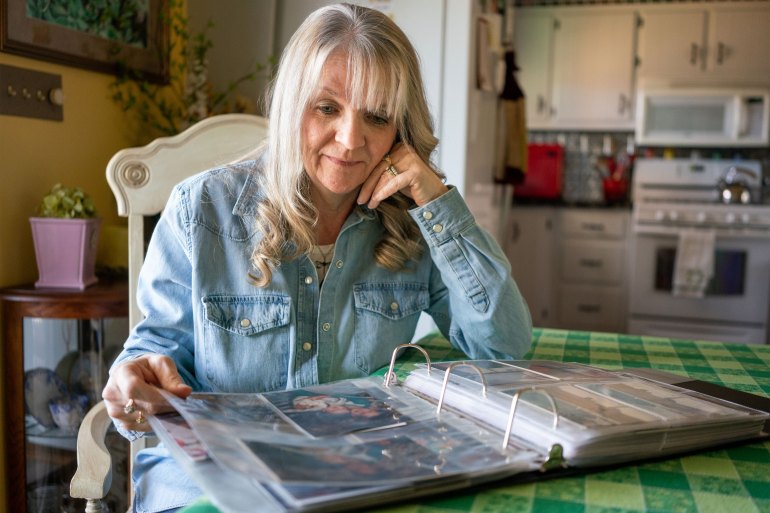
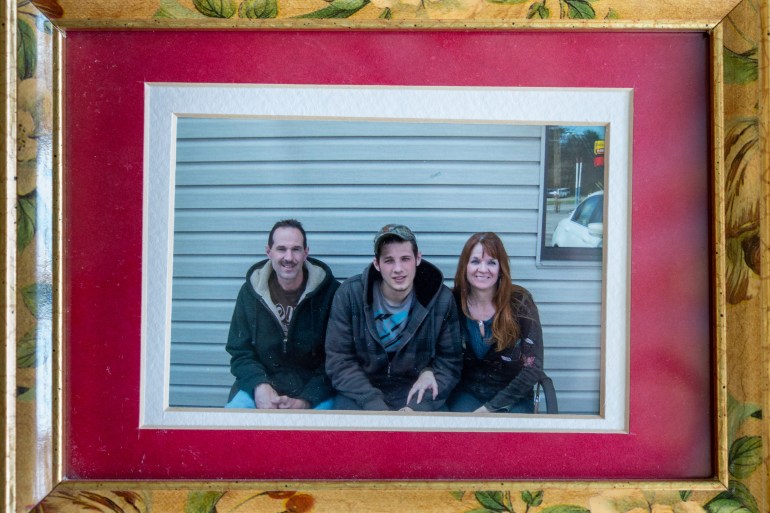
Those affected by the opioid epidemic and those working to fight it have an array of ideas: To Marianne Sinisi, who lost her 26-year-old son, Shawn, to overdose in western Pennsylvania, the settlement funds are “blood money” that she hopes can spare other parents similar grief. To Steve Alsum, who works with people who use drugs in Grand Rapids, Michigan, it’s a chance to finally reach all those in need. And to David Garbark, who is in recovery from opioid addiction, it’s a way to give others in his eastern North Carolina community a second chance, too.

Spending the money effectively and equitably is a tall order, given the persistence and complexity of addiction, which affects individuals and communities, and is the topic of heated debates in scientific research, social services, politics, criminal justice, and even at kitchen tables.

What’s more, many states are not being transparent about where the funds are going and who will benefit. An investigation by KHN and Christine Minhee, founder of OpioidSettlementTracker.com, concluded only 12 states have committed to detailed public reporting of all their spending.

The analysis involved scouring hundreds of legal documents, laws, and public statements to determine how each state is divvying up its settlement money among state agencies, city and county governments, and councils that oversee dedicated trusts. The next step was to determine the level and detail of public reporting required. The finding: Few states promise to report in ways that are accessible to the average person, and many are silent on the issue of transparency altogether.

More than $3 billion has gone out to state and local governments so far. KHN will be following how that cash — and the billions set to arrive in coming years — is used.

Per most of the settlements, governments are required to report only on the 15% of the money that can be used for things unrelated to the epidemic, like offsetting budget shortfalls or fixing old roads. As of March 28, only three states and counties had filed such reports. Although they listed dollar amounts, none said precisely how the money was spent.

State and local governments can enact more rigorous reporting protocols — for example, requiring a publicly available list of every place that receives money and for what purpose — but few have so far.

Loading…

Left in the Dark

More than 250,000 Americans have died of overdoses from prescription opioids, which were aggressively promoted as painkillers and distributed by a host of health care companies, including Johnson & Johnson, AmerisourceBergen, McKesson, and Walmart. The settlements are meant to compensate and remediate the effects of that corporate behavior.

But many people whose lives have been upended are again feeling traumatized.

Sinisi said she and other parents who’ve lost kids to addiction have been left in the dark or, worse, treated like nuisances by officials in charge of the money.

“They want to look at you as this angry parent who lost a child,” she said, “rather than a concerned citizen who wants to see a difference made for other mothers, fathers, and their children.”

In Michigan, even the state’s Opioid Advisory Commission, which is tasked with evaluating the use of settlement money, has struggled to track the cash.

For six months after the state legislature allotted $39 million of settlement funds to the health department last summer, little information was made public about how that money would be spent. No news releases. No way for organizations to apply for funds.

“We can’t really identify the impact of those dollars if we don’t know how they’re being used,” said Dr. Cara Poland, the commission’s chair and an addiction-medicine doctor.

With scant oversight nationwide, many people fear dollars may flow to efforts that research has proven mostly useless but jibe with the local political bent, like arresting people who use drugs, expanding jails, and favoring abstinence-only recovery over medications. They may go to the loudest bidder, with companies promising to find the next groundbreaking treatment and rehab facilities — some with shoddy track records — eyeing the cash.

Not to mention concerns that money will flow to activities that have little to nothing to do with opioid treatment: building new stadiums or public schools. Back in the ’90s, these day-to-day budget priorities consumed most of what states won from cigarette companies in the national tobacco settlement, leaving little for anti-smoking programs.

The opioid settlement funds will be different, say state attorneys general who fought for them. In addition to requiring at least 85% of the money be used on opioid-related expenses, most agreements include a list of suggested interventions like increasing addiction treatment for the uninsured and expanding recovery housing.

“We wanted to give states flexibility on what approaches they wanted to adopt,” while ensuring money didn’t go to “provide corporate tax relief” as the tobacco dollars did, said North Carolina Attorney General Josh Stein, who led negotiations for the national settlements.

But enforcement of the 85% standard is, oddly, left to the companies that paid out the money. They are unlikely to be vigilant, legal experts say. The money is committed already and, for many of these multibillion-dollar companies, the settlements are chump change. For example, Johnson & Johnson is set to pay $5 billion over nine years, but the company reported sales of nearly $95 billion in the past year alone.

An Emerging Picture

As the checks start to trickle in, a handful of states are committed to transparency while others seem to be falling short. Missouri has promised to report all its spending in online reports so that anyone can see who receives money, how much, and for what programs. New Hampshire already has posted reports online, and Colorado has created a public dashboard to track how funds are used.

Other states, like Nevada, have taken a middle-of-the-road approach, requiring that recipients report to the legislature or another oversight body, but not ensuring the reports will go public. Some states require audits but don’t promise to list specific expenses. And others allow the public to request records but won’t provide them automatically.

Then there are states hit hard by the opioid epidemic like Michigan and Ohio, where problems with transparency are already emerging. Each state is expecting to receive at least $1 billion.

When Poland, of Michigan’s Opioid Advisory Commission, realized she was getting little information on how the state’s funds were being spent, her commission decided to use its first annual report — published this month — to demand better. “Timely and transparent reporting” to the public is “an ethical responsibility,” it said, calling on lawmakers to enact greater oversight for settlement cash recipients and create a public dashboard to track spending.

KHN interviewed nearly a dozen people and filed a public records request to uncover how the state health department is spending the initial settlement funds allocation of $39 million.

A budget document obtained by KHN shows that as of Jan. 9, the Michigan Department of Health and Human Services had contracted $3.9 million in settlement funds to 35 grantees. Most are local health departments or syringe service programs that the state health department has previously funded.

An additional $27 million is set aside for particular interventions, such as growing the addiction treatment workforce, expanding recovery housing, and mitigating the harms of opioid use with medications like naloxone.

And, after KHN’s inquiries, the department released a statement that listed similar priorities.

Those initiatives make sense to Jonathan Stoltman, director of the Michigan-based Opioid Policy Institute, which researches stigma and digital privacy in addiction treatment. But he would have liked to have known about them in advance and to have had a clear process laid out for groups to apply for the funds. Otherwise, organizations that are well positioned to use the money to help those most in need may miss a once-in-a-lifetime chance to scale up their work and save lives.

Last summer, when Stoltman inquired about applying for the funds, the health department told him to submit a “high level proposal” to “share around,” according to emails reviewed by KHN.

“Anything that is backdoor scares me,” said Stoltman. “I got lucky that I found who to talk to, even if it didn’t go anywhere.”

Steve Alsum, executive director of the Grand Rapids Red Project, which was awarded about $266,000 to improve the health of people who use drugs, said he expected the state to have an application process with scoring criteria to explain why certain groups were chosen. But, he said, “it hasn’t been clear who is making the decision and how it’s made.”

Jared Welehodsky, who leads the department’s efforts related to the settlement, said it is in the process of releasing several competitive grant applications for the bulk of the money. That didn’t happen sooner because most payments didn’t arrive until the end of 2022 and “we didn’t want to comment on how the money was going out when we didn’t have money to go out,” he said.

Talk of Keeping the Public Out

In Newark, Ohio, Linda Mossholder, 75, has been inquiring about the settlement dollars at City Council meetings since last summer. As a volunteer with Newark Homeless Outreach, which serves weekly free lunches, she encounters many people who use drugs and wants to see the money help them.

The proud owner of a T-shirt that reads, “Your first mistake is thinking I’m just an old lady,” Mossholder has followed up with emails, voicemails, and public records requests. But she hasn’t gotten a clear answer about how the city plans to use the nearly $50,000 it’s already received.

In January, Mossholder said, the city’s director of public service finally told her the plan was to allocate settlement cash to first responders for naloxone. But when KHN filed public records requests to confirm, City Auditor Ryan Bubb wrote, “No funds have been allocated or spent.”

Meanwhile, in northeastern Ohio, a regional board that will control millions of settlement dollars spent a February meeting discussing whether the public should be allowed to access meeting recordings at all.

“I wouldn’t open it up to the public, honestly,” said Judy Moran, a board member who represents Eastlake, according to a recording of the meeting obtained by KHN. Other board members asked if their gatherings were subject to the state’s open-meeting laws.

Moran later told KHN, “Of course the public has a right to know how these funds are disbursed,” but she said she worried recordings would allow people to take words “out of context.”

In Ohio at least, that may not be a choice for much longer.

A lawsuit brought by Harm Reduction Ohio to open the meetings of a separate board — the OneOhio Recovery Foundation, which oversees the lion’s share of the state’s expected $1 billion — is working its way through the courts. A local judge this month rejected the foundation’s request to dismiss the lawsuit, writing that “the public deserves transparency.”

But OneOhio spokesperson Connie Luck said the foundation is a “private, nonprofit organization, and not a government agency.” It has so far allowed public attendance at meetings, but has said it is not required to do so.

The final ruling in this lawsuit, which is the first of its kind on opioid settlement funds, will set a precedent for the public’s right to information nationally.

In some parts of the country, the prospect of dollars to treat a long-underfunded epidemic brings hope, said Tricia Christensen, who works at a nonprofit tracking settlement funds across Appalachia. When people know what’s happening, it not only deters misuse but can reveal surprising successes, she said.

That knowledge is empowering.

“These funds are the cavalry coming in. You’re finally getting relief after suffering alone for so long,” said Crystal Glass, of southwestern Virginia, who is in recovery from opioid and meth use and now works as a peer recovery specialist.

She hopes officials will involve people affected by addiction in their decisions.

As she put it: Transparency “is letting everyone — I mean everyone — know they can be part of this.”

KHN’s Colleen DeGuzman and Megan Kalata contributed to this report.

KHN (Kaiser Health News) is a national newsroom that produces in-depth journalism about health issues. Together with Policy Analysis and Polling, KHN is one of the three major operating programs at KFF (Kaiser Family Foundation). KFF is an endowed nonprofit organization providing information on health issues to the nation.

USE OUR CONTENT

This story can be republished for free (details).


from Kaiser Health News https://ift.tt/5WCBUGX

Popular Posts